

A hypochlorite dosing rate describes what enters a process. A chlorine residual describes what remains in the water at a defined point after reactions and contact time. The two measurements answer different questions.
In brief: state whether you need feed concentration, free residual, combined residual or total residual, and place the sample point where that result is meaningful.
Dosing chemical and residual are not interchangeable
Sodium hypochlorite is one way to add available chlorine, but the feed strength is not the same as the chlorine remaining in treated water. The residual depends on reactions with the water and its constituents as well as process conditions and the time between dosing and measurement.
If the objective is disinfection or downstream process control, specify the residual to be measured. If the objective is chemical inventory or feed verification, the dosing solution itself may be the relevant sample. Do not use one result as a proxy for the other without a validated relationship.
Define free, combined and total residual
Free available chlorine is principally hypochlorous acid and hypochlorite ion. Combined chlorine includes chlorine associated with nitrogen compounds such as chloramines. Total residual is the sum of free and combined residual. The distinction can change how operators interpret a result and what response they consider.
EPA technical material describes separate free and total residual methods and notes that continuous monitoring methods must be checked for chemistry, accuracy and precision. That source addresses drinking-water monitoring, so it is a method reference, not a substitute for wastewater permit requirements.
Put the sample point after the process stage you intend to control
A point just downstream of injection may not represent the residual after the intended contact stage. A later point may answer a different question again. Confirm hydraulic conditions, mixing, side streams and the required response time when siting a sample intake.
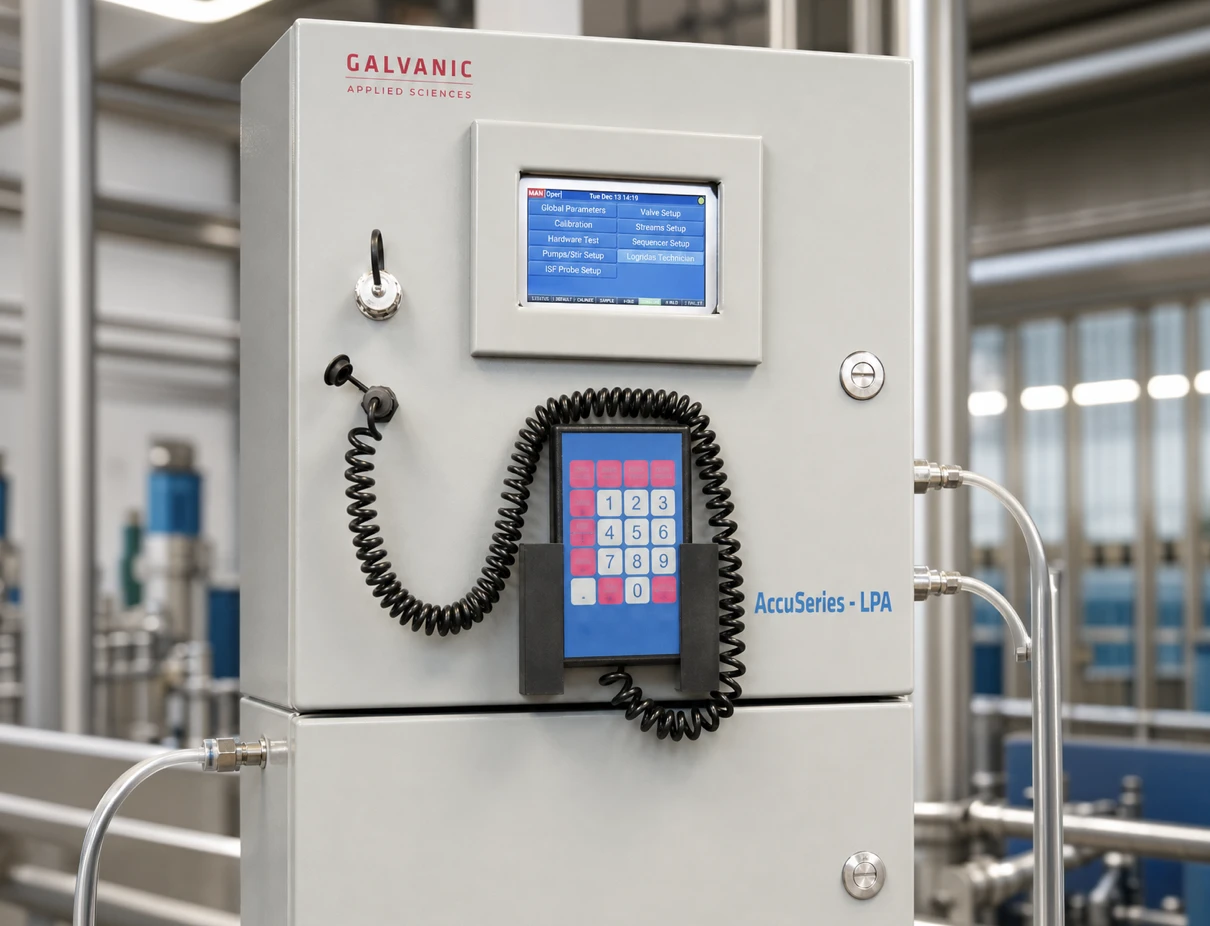
Use the AccuSeries chlorine and hypochlorite page with the effluent monitoring guide to start the discussion, then define the actual measurand and reference method for the site.
Validate the measurement in the real matrix
Residual chlorine can change between the process and the reference test. Collect the online and reference samples at the same location and as close together in time as practical. Record flow, contact conditions and any sample handling that could affect the comparison.
Alarms should lead to a defined operational check, not an automatic dose increase. Review the process objective, applicable safety procedures, dosing equipment and confirmatory test before changing control settings.
What to confirm before specification
- Is the target feed solution, free residual, combined residual or total residual?
- What is the exact sampling point relative to dosing and contact?
- How will the result be reported and compared with the reference method?
- What matrix constituents or sample delay could alter the residual?
- Which operator response is approved for an alarm or changing trend?
Review your chlorine measurement duty
Share the dosing point, contact stage, required residual definition, sample matrix and reference test with PMA.
Source basis
Source basis: US EPA guidance defining free and total residual chlorine and EPA Method 334.0 for on-line residual chlorine in drinking water. For related parent-company instrumentation context, see PMA products and services. The drinking-water method is not presented as a wastewater compliance method.