

Chemical Scrubber Control
Measure selected scrubber-liquor chemistry more frequently to support reagent strength, blowdown and treatment decisions.
Scrubber performance depends on circulating chemistry
A wet scrubber may need the liquor kept within an operating window while absorption, oxidation, contamination and make-up change the chemistry. pH alone may not describe reagent strength or reaction products.
Parameter-specific wet chemistry can add a direct concentration result where a suitable method is available, but the sample point and conditioning must cope with solids, entrained gas and aggressive chemicals.
Define the complete scrubber-control duty
The application review should document:
- The gas treated, absorbent used and control objective.
- Reagent-strength, contaminant and reaction-product ranges.
- Solids, entrained gas, temperature and materials compatibility.
- The sample point, transport, return and disposal arrangements.
- Dosing, blowdown, alarm and interlock requirements.
- The verification, cleaning and maintenance plan.
This connects the analytical result to the scrubber operating strategy and the practical conditions surrounding the sample.
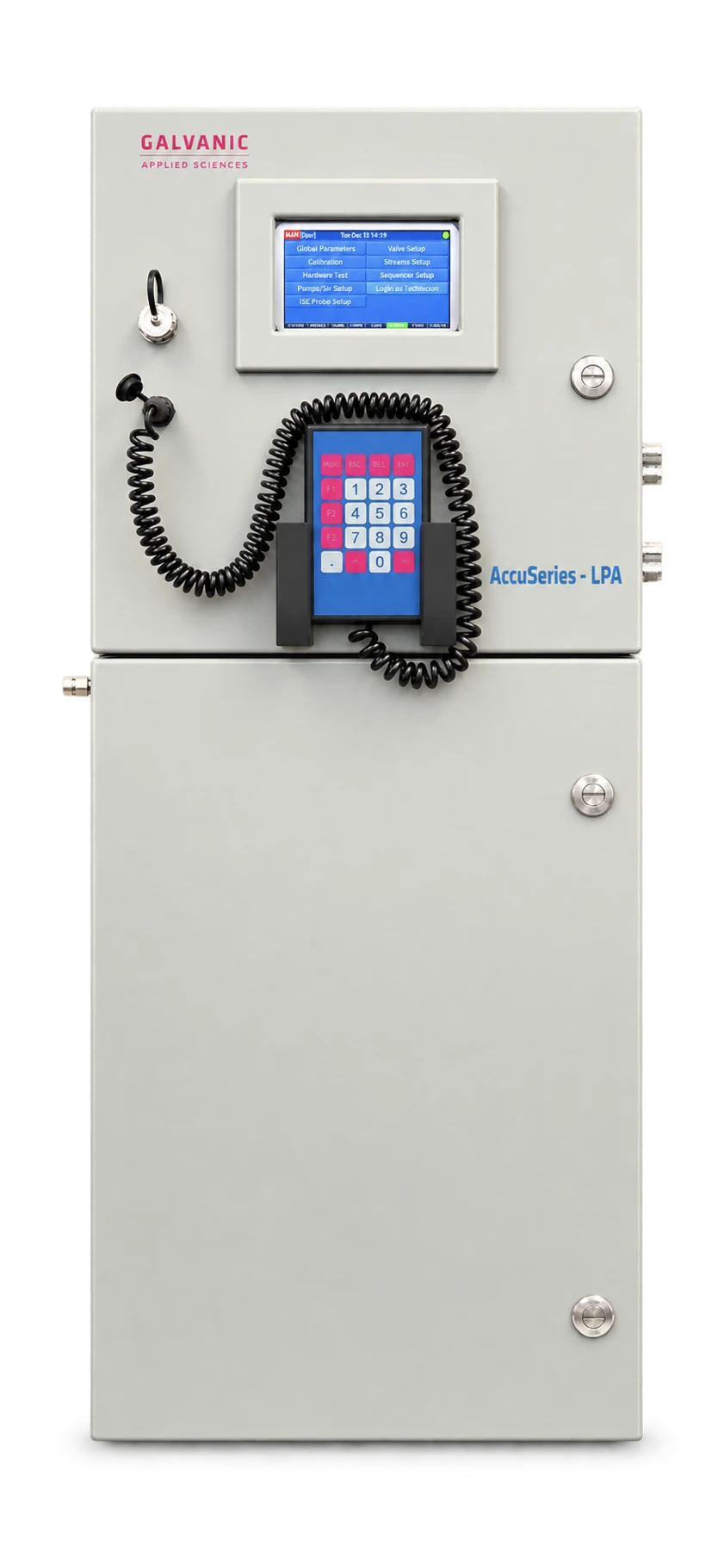
Connect the result to the control strategy
01
Reagent strength
Use the relevant concentration measurement to review make-up or dosing rather than relying on an indirect surrogate alone.
02
Reaction products
Trend selected species that indicate loading, conversion or treatment condition.
03
Blowdown and make-up
Support an operating balance that manages accumulation while limiting unnecessary chemical and water use.
Choose the chemistry for the scrubber duty
The required parameter depends on the gas treated, absorbent used and control objective. AccuSeries methods can be reviewed for acids, caustic and selected ionic species.
Acid Concentration
Monitor acid concentration where scrubber-liquor strength and process control require a direct wet-chemistry result.
Caustic Concentration
Measure caustic or sodium hydroxide strength to support reagent dosing, make-up and blowdown decisions.
Chloride
Track chloride where build-up, corrosion risk or circulating-liquor chemistry affects the scrubber duty.
Sulphite
Review sulphite measurement where oxidation state and sulphur chemistry are relevant to the treatment process.
Application boundaries
Strong acids, alkalis, oxidants, precipitates and dissolved gases can affect materials, safety and analytical chemistry. The method and sample system require application-specific review.
Online measurement supports the operating decision. It does not replace statutory sampling, accredited laboratory work or application-specific verification.
Define the scrubber measurement duty
Describe the circulating liquor and control action together.
- Gas duty, absorbent and reaction chemistry.
- Target parameter, units and operating window.
- Liquor temperature, solids, gas carry-under and pressure.
- Normal make-up, dosing and blowdown sequence.
- Materials and site safety requirements.
- Required cycle time, outputs, alarms and verification method.
Improve the scrubber application brief with PMA
Share the gas duty, circulating chemistry, operating window, sample conditions and control objective. PMA can review method suitability, sample handling, analyser configuration, installation and support.