

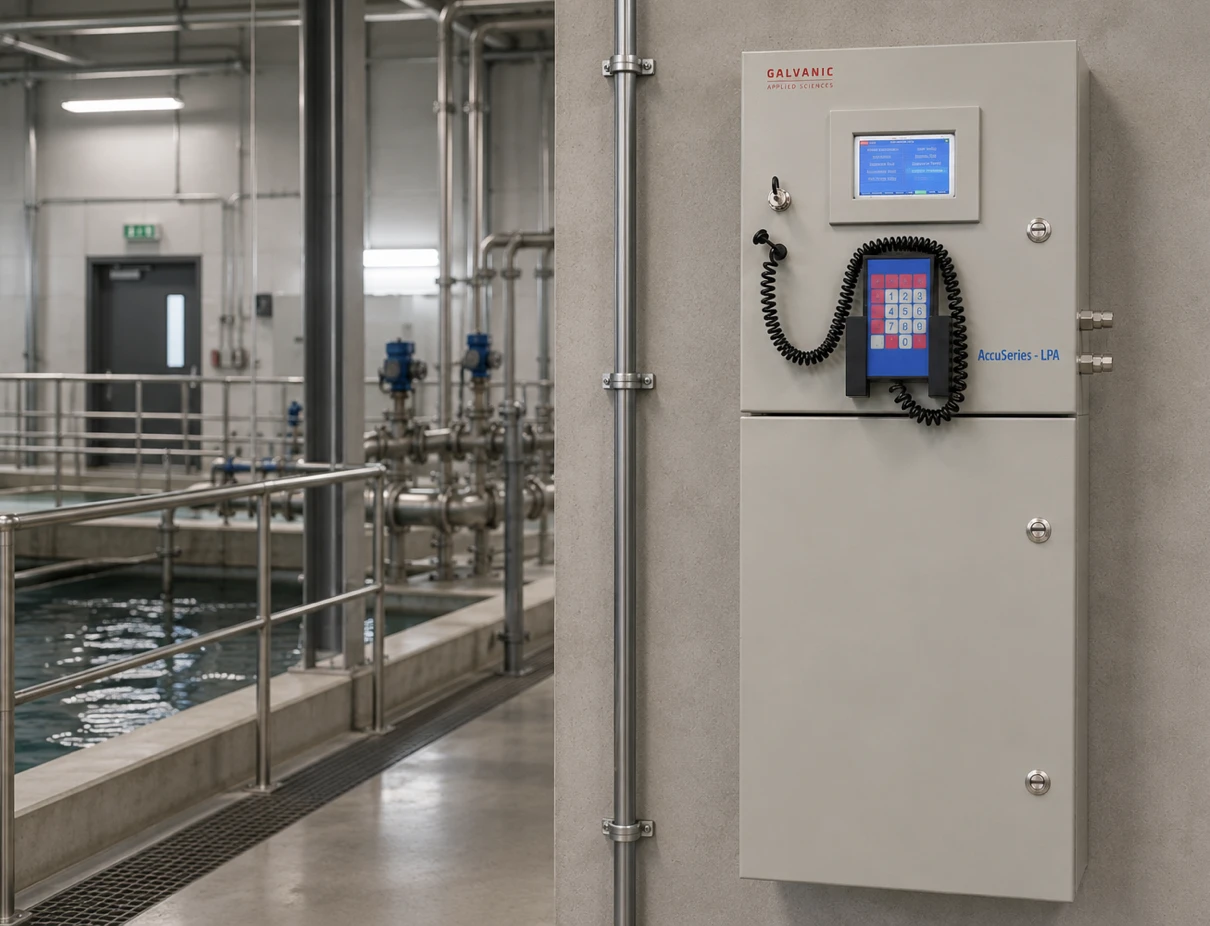
Online aluminium monitoring after coagulant dosing can help teams investigate treatment trends, but the result is only meaningful when the aluminium fraction and sample point are explicit.
In brief: define dissolved, total or method-specific aluminium first; then select a representative point and verify the online result against a comparable reference method.
Define the aluminium result before choosing the method
A process question might concern residual aluminium after treatment, total recoverable aluminium in an effluent sample or the dissolved fraction. These are different measurands. Filtration, digestion, preservation and the laboratory method can change what a reported value represents.
Write the result basis and units into the monitoring specification. The Environment Agency’s discharge guidance notes that substances can occur in different forms and says the exact form to be determined must be stated. This prevents an online result and a laboratory result being compared as if they were identical when their preparation differs.
Choose a sample point that answers the operating question
A point immediately after chemical injection may be too early to represent the outcome of mixing, reaction and separation. A later point may better reflect the treated stream, while a final-effluent point may be chosen for a different operational or permit purpose. The sample point should follow the decision the result will support.
Check mixing, solids settling, side streams and residence time. Avoid locations where deposits, stagnant pockets or incomplete mixing make a grab sample unrepresentative. Document the point and compare online and reference samples as close together in time as practical.
Account for wastewater matrix and sample handling
Suspended solids, colour and other treatment chemicals may affect sample transport, conditioning or analytical response. Any filtration or solids-removal step can also change the aluminium fraction reaching an analyser, so conditioning must be part of the method definition rather than an undocumented convenience.
Review the AccuSeries online aluminium analyser page alongside the wastewater effluent monitoring guide; then confirm the particular matrix, range, interferences and reference procedure for the intended installation.
Plan verification and the response to a trend
A useful verification compares like with like: same sample point, similar timing, consistent filtration or digestion, and the same reporting basis. Record any difference in sample preparation before deciding that two results disagree.
Decide in advance what the operator should do when aluminium changes: check dosing and mixing, review solids separation, inspect the sampling system or collect a confirmatory sample. Online monitoring supports process decisions; it does not replace a permit method or an accredited laboratory result where one is required.
Questions to answer before specifying online aluminium
- Is the target dissolved, total, recoverable or another defined aluminium fraction?
- Where will the sample be taken relative to dosing, mixing and solids separation?
- What are the expected normal and upset concentrations and reporting units?
- Which filtration, digestion or preservation steps define the reference result?
- How will matrix effects, calibration and confirmatory sampling be assessed?
Discuss your aluminium monitoring application
Share the treatment stage, required aluminium fraction, sample point, range and reference method so PMA can review the complete measurement duty.
Source basis
This guide draws on Environment Agency guidance on defining a determinand and choosing a representative sampling point and the US EPA approved chemical test methods for laboratory metal analysis. For broader parent-company context, see PMA’s final-effluent monitoring resource. Applicable permits and validated site methods remain authoritative.